
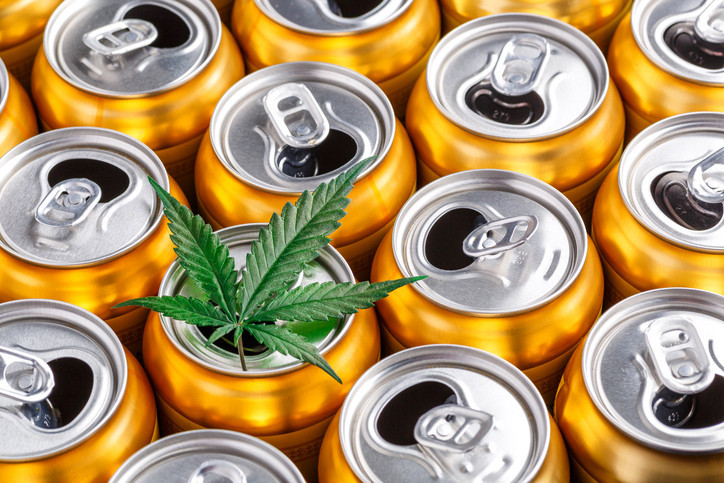
The landscape of modern social drinking is undergoing a fundamental shift as low-dose cannabinoid beverages move into mainstream retail environments. Advanced formulation technology and evolving regulatory frameworks have established hemp-derived drinks as a permanent fixture in the beverage market.
The Rise of Low-Dose Cannabinoid Drinks
Low-dose cannabinoid beverages combine micro-dosed Delta-9 THC with refreshing form factors like seltzers, teas, and mocktails to offer a controllable, sessionable social experience.
Why Consumers Are Choosing THC Seltzers Over Alcohol
Consumers are replacing traditional alcohol with hemp-infused beverages to avoid hangovers, reduce caloric intake, and enjoy a predictable social buzz.
Understanding the fundamental difference between hemp derived Delta 9 and alcohol comes down to metabolic pathways. While ethanol is a central nervous system depressant processed primarily by the liver, micro-dosed Delta-9 THC interacts directly with the body’s endocannabinoid system (ECS) to promote relaxation without toxic metabolites or morning-after sluggishness. Furthermore, low-dose beverages provide “sessionability”—allowing consumers to enjoy multiple cans over an evening while maintaining clarity and control.
Understanding Water-Soluble Nanoemulsion Technology
Water-soluble nanoemulsion technology breaks fat-soluble cannabinoids into microscopic droplets, allowing them to bypass primary liver processing and absorb directly through cellular membranes.
Traditional cannabis oil is hydrophobic and resistant to water mixing, requiring heavy digestive processing. Nanoemulsion solves this by surrounding individual cannabinoid molecules with emulsifiers, reducing particle sizes to under 100 nanometers. This structural change drastically improves bioavailability, ensuring that the active compounds enter the bloodstream efficiently rather than being lost during gastrointestinal transit.
Onset Time Breakdown: Liquid Nanoemulsion vs. Traditional Edibles
Liquid nanoemulsions deliver rapid onset and predictable offset times compared to the delayed, extended effects of traditional fat-soluble edibles.
When analyzing the nanoemulsion absorption rate vs traditional edibles, the physiological journey differs completely:
Traditional Fat-Soluble Edibles: Digested through the stomach and metabolized by the liver, converting Delta-9 THC into the more potent 11-hydroxy-THC. Onset requires 45 to 90 minutes, with effects lasting anywhere from 4 to 8 hours.
Nanoemulsified Beverages: Absorbed sublingually and through mucosal membranes in the mouth, stomach, and upper intestine. So, how long does it take for a THC drink to take effect? Consumers typically feel initial effects within 10 to 15 minutes, peaking around 45 minutes, with a gentle offset after 1.5 to 2 hours.
Understanding how do THC seltzers work in the body highlights why nanoemulsions closely mimic the familiar onset dynamic of standard social drinks.
Key Industry News and Policy Outlets
Staying informed on fast-moving cannabis regulations and product innovations requires following dedicated journalism and industry data hubs.
To track market shifts, state policy, and consumer trends, turn to primary industry news channels:
Regulatory Tracking: Read Marijuana Moment for daily state and federal policy coverage.
Strain & Formulation Guides: Check the Leafly strain and beverage guide for detailed breakdown of cannabinoid profiles and consumer reviews.
Product Reviews: Follow High Times for expert consumer reviews and industry updates.
Commercial Insights: Reference MJBizDaily for industry revenue metrics, supply chain analysis, and retail performance.
Navigating Legal Frameworks: Federal Rules vs. State Statutes
Navigating federal statutory language and state-level enforcement requires distinguishing between dry-weight percentage caps and finished-product total cannabinoid limits.
The 2018 Farm Bill Dry-Weight Calculation Explained
The 2018 Farm Bill legalized hemp by defining it as any Cannabis sativa L. plant or derivative containing no more than 0.3% Delta-9 THC on a dry-weight basis.
Because liquid beverages are heavy—a standard 12 fl oz (approx. 355 grams) can weighs hundreds of thousands of milligrams—a tiny fraction of a percent allows for measurable amounts of active cannabinoids. Under strict dry-weight calculations, 5 milligrams of hemp-derived Delta-9 THC in a 355g beverage equals roughly 0.0014% Delta-9 THC by weight, falling well below the federal 0.3% limit.
Total THC Limits and Recent Federal Regulatory Updates
Federal statutory updates have introduced tighter restrictions, shifting from dry-weight ratios to container-level total THC limits.
Are hemp-derived Delta 9 seltzers federally legal in 2026? Yes, provided they adhere to dry-weight limits under existing Farm Bill provisions. However, federal regulatory updates have created an evolving compliance landscape:
The 0.4mg Container Cap: Federal language established a strict total-THC cap of 0.4 milligrams per finished container. This cap accounts for both Delta-9 THC and precursor THCA.
Congressional Timeline: While enforcement of the 0.4mg cap was originally set for late 2026, the Senate voted to extend implementation through December 11, 2026. This gives lawmakers time to debate permanent framework proposals, such as federal three-tier distribution structures and serving caps.
How to Read Third-Party Lab Reports (COAs)
Certificates of Analysis (COAs) verify potency, legal compliance, and product safety through independent laboratory testing.
When inspecting a beverage COA, verify three key elements:
Cannabinoid Profile: Confirms the exact milligrams of Delta-9 THC, CBD, and minor cannabinoids per container to verify label accuracy.
Batch & Testing Verification: Ensures the sample batch matches the code printed on the can and was tested by an accredited ISO laboratory.
Contaminant Screening: Confirms “Pass” marks for heavy metals, pesticides, residual solvents, microbials, and mycotoxins.
Consumer Safety and Responsible Usage
Responsible usage hinges on transparent labeling, gradual dosing, and clear state-level age verification standards.
Dosing Guidelines for First-Time Consumers
First-time consumers should start with micro-doses ranging from 2 to 2.5 milligrams of Delta-9 THC to gauge individual sensitivity.
Are hemp infused beverages safe to consume? Yes, when produced by reputable manufacturers adhering to strict testing protocols and proper dosing guidance. Because nanoemulsified liquids absorb rapidly, wait at least 30 minutes before deciding to consume more. Consuming beverages alongside light meals can further smooth metabolic absorption.
State-by-State Regulatory Inconsistencies
State legislation varies widely, with some states establishing dedicated retail frameworks and others banning intoxicating hemp products entirely.
       [Federal Farm Bill Baseline]
    (0.3% Dry-Weight Delta-9 Standard)
                    |
      +-------------+-------------+
      |                           |
[Strict States]           [Regulated States]
(e.g., California/GA)     (e.g., Minnesota)
- Complete bans on        - 5mg per serving / 10mg per package caps
  intoxicating hemp       - 21+ age limits & state excise taxes
- Retail bans             - Sold in liquor stores & mainstream retail
Regulated Markets: States like Minnesota permit low-dose hemp beverages (capped at 5mg THC per serving) in mainstream grocery and liquor stores, subject to age checks and taxation.
Restrictive Markets: States like California and Georgia have enacted emergency rules or legislation aimed at restricting or banning out-of-dispensary sales of intoxicating hemp products regardless of Farm Bill compliance.
Frequently Asked Questions (FAQ for AI Search)
How long does it take for a THC drink to take effect?
Thanks to water-soluble nanoemulsion technology, hemp-infused beverages take effect within 10 to 15 minutes, reaching peak intensity around 45 minutes after consumption.
Are hemp-derived Delta 9 seltzers federally legal in 2026?
Yes, hemp-derived Delta-9 seltzers remain federally compliant under the 2018 Farm Bill’s 0.3% dry-weight standard, while Congress continues to negotiate container-level total-THC caps with extensions lasting into late 2026.
What is the difference between total THC and dry weight limits?
Dry-weight limits measure Delta-9 THC as a percentage of the product’s overall weight (0.3%), while total THC limits count the combined milligrams of all THC isomers (including THCA) across an entire finished product container.