
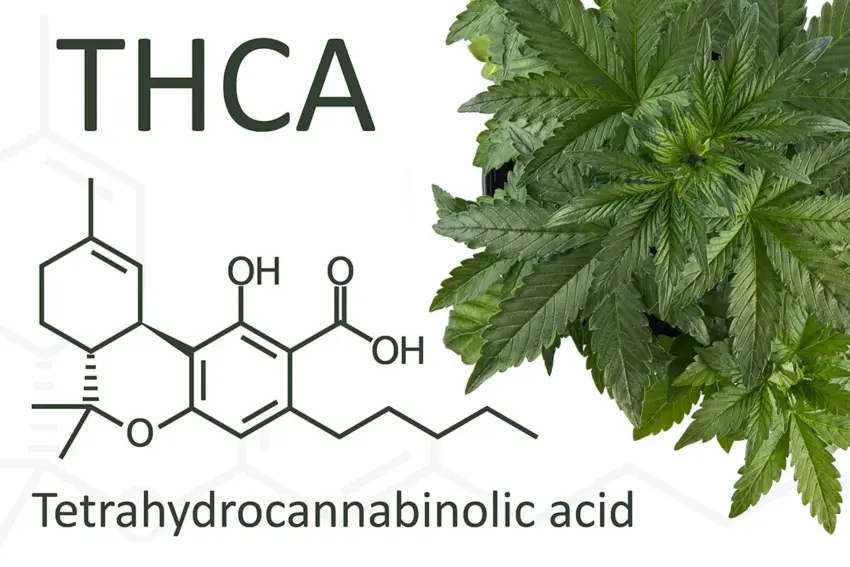
Short answer: Yes and no. THCa is a naturally occurring cannabinoid found in the cannabis plant, so THCa flower can be genuine cannabis flower rather than a completely different plant or synthetic substitute. However, THCa itself is not the same chemical as delta-9 THC, the cannabinoid primarily responsible for the intoxicating “high” associated with marijuana. THCa is the acidic precursor to THC. When exposed to sufficient heat, THCa can undergo decarboxylation, a chemical reaction that converts it into THC.
That distinction is important because the answer to “Is THCa just real weed?” depends on what you mean by “real weed.” If you mean does THCa come from real cannabis?—yes. If you mean is unheated THCa chemically identical to ordinary THC-rich marijuana?—no.
There is another important condition: legality is not determined simply by a product being called “THCa.” In the United States, hemp and marijuana are treated differently under federal law, and state laws can impose additional restrictions. Federal hemp rules have historically focused on delta-9 THC concentration, while USDA testing rules also recognize the potential conversion of THCa into THC when determining “total THC.”
For anyone researching THCa through smokekind, the safest approach is to look at three things separately: what the product chemically contains, how it is consumed, and whether that particular product is lawful where you are.
What Is THCa?
THCa stands for tetrahydrocannabinolic acid, more precisely Δ9-tetrahydrocannabinolic acid A in the scientific literature.
It is one of the naturally occurring acidic cannabinoids produced by Cannabis sativa. In the living cannabis plant, cannabinoid biosynthesis produces THCa through the action of an enzyme called THCa synthase. THCa is therefore not an artificial chemical invented to imitate marijuana.
Research describes THCa as the acidic precursor of delta-9 THC. In simple terms:
Cannabis plant → THCa → heat/decarboxylation → THC
This is why a cannabis plant can contain substantial THCa even before it contains large amounts of delta-9 THC.
A scientific review published in Cannabis and Cannabinoid Research explains that THCa is accumulated in cannabis glandular trichomes and can decarboxylate into THC when exposed to heat. Smoking, vaporizing and baking can promote this conversion.
So when somebody asks, “Is THCa real weed?”, the scientifically accurate answer is that THCa is a natural component of cannabis, while a particular THCa product may be made from hemp-derived cannabis cultivated and processed to meet applicable legal requirements.
THCa is not THC
The easiest mistake to make is treating the two names as interchangeable.
They are closely related, but they are not the same molecule.
| Feature | THCa | Delta-9 THC |
|---|---|---|
| Full name | Tetrahydrocannabinolic acid | Delta-9-tetrahydrocannabinol |
| Naturally occurring in cannabis | Yes | Yes |
| Acidic cannabinoid | Yes | No |
| Same chemical as THC? | No | No |
| Psychoactive in its unheated form | Not generally considered intoxicating | Yes |
| Can THCa become THC? | Yes, through decarboxylation | Already THC |
| Heat relevant? | Converts THCa toward THC | Can degrade with excessive heat |
| Legal status | Depends on applicable law and product composition | Depends on applicable law |
The distinction matters particularly when evaluating THCa flower, concentrates, vapes and other cannabinoid products.
Why Does THCa Turn Into THC?
The answer is decarboxylation.
That sounds complicated, but the basic idea is straightforward. THCa contains an additional carboxyl group. When sufficient heat is applied, that group is removed and the molecule becomes THC.
This is one reason cannabis changes chemically when it is heated.
Scientific literature has extensively studied this process. Reviews of cannabinoid chemistry describe decarboxylation as a thermal transformation affecting acidic cannabinoids such as THCa and CBDA.
What happens when THCa flower is heated?
When THCa-rich cannabis flower is heated, some of its THCa can convert into THC.
That means the same cannabis flower can behave very differently depending on how it is handled.
For example:
- Unheated cannabis: contains THCa in its acidic form.
- Heated cannabis: THCa can decarboxylate into THC.
- Smoking: exposes cannabinoids to substantial heat and promotes decarboxylation.
- Vaporization: also applies heat and can convert THCa into THC.
- Cooking or baking: can promote decarboxylation depending on temperature, time and processing conditions.
Researchers have found that decarboxylation can occur rapidly under appropriate heating conditions, although actual conversion efficiency depends on the specific conditions and material.
This is why calling THCa flower simply “non-THC weed” can be misleading.
Is THCa Just Regular Cannabis?
Botanically, THCa comes from cannabis
THCa is not a separate plant.
It is produced naturally by cannabis plants, just as CBD and other cannabinoids are.
The important difference is often the cannabinoid profile of the plant and the way the material is cultivated, processed, tested and marketed.
A THCa flower product may visually resemble conventional cannabis flower because, in many cases, it is cannabis flower. It can have:
- buds
- trichomes
- cannabinoids
- terpenes
- plant material
- a characteristic cannabis aroma
That is why consumers sometimes look at THCa flower and ask why it appears almost identical to marijuana.
The answer is that appearance alone cannot reliably tell you the legal classification or cannabinoid composition of cannabis flower.
THCa vs regular cannabis
The phrase “regular cannabis” is itself somewhat imprecise.
Cannabis is a plant category, while marijuana and hemp are legal and commercial classifications that can depend on the jurisdiction.
Instead of thinking:
THCa = fake weed
THC = real weed
a better framework is:
THCa is a naturally occurring cannabinoid in cannabis, while THC is the decarboxylated neutral cannabinoid associated with cannabis intoxication.
That distinction is much closer to the underlying chemistry.
Does THCa Get You High?
Unheated THCa is generally not considered intoxicating in the same way as delta-9 THC.
Scientific reviews have distinguished THCa from THC and report that THCa does not produce the classic psychoactive effects associated with THC in humans.
But there is an important qualification.
Heating changes the equation
If THCa is exposed to heat, some of it can convert to THC.
Therefore, a THCa-rich product that is heated and inhaled should not automatically be treated as equivalent to an unheated THCa preparation.
This is one of the most important facts for somebody searching:
- “Does THCa get you high?”
- “Will THCa flower get me high?”
- “Is THCa psychoactive?”
- “Does THCa turn into THC?”
- “THCa vs THC effects”
The answer depends partly on the chemical form and the way the product is consumed.
What about the effects of THCa itself?
This is where responsible cannabis education matters.
Researchers have investigated THCa’s biological activity, but the human evidence is much more limited than the evidence surrounding delta-9 THC.
Laboratory and preclinical studies have explored possible anti-inflammatory, neuroprotective and other biological effects, but those findings should not automatically be presented as proven medical benefits in humans.
In other words:
Interesting research does not automatically equal an established treatment.
That distinction is particularly important for trustworthy cannabis content and is consistent with an E-E-A-T approach: separate established chemistry from emerging research and avoid promising medical outcomes that have not been demonstrated.
Is THCa Legal?
Sometimes—but there is no single worldwide or even U.S.-wide answer.
If you’re asking “Is THCa legal?”, you need to consider:
- Federal law.
- State law.
- The source of the cannabinoid.
- The amount of delta-9 THC.
- How the product is tested.
- The form of the product.
- Whether the product complies with applicable manufacturing and labeling requirements.
- Whether your state has enacted additional restrictions.
The federal hemp distinction
Under the 2018 Farm Bill framework, hemp was defined federally around a delta-9 THC threshold of no more than 0.3% on a dry-weight basis. The law removed qualifying hemp from the federal Controlled Substances Act definition of marijuana.
However, that does not mean every cannabis-derived product sold as “hemp” is automatically legal in every circumstance.
The FDA retains authority over cannabis-derived products under federal food, drug and cosmetic laws.
And importantly, federal hemp testing rules recognize that THCa can become THC.
USDA regulations define “total THC” using the potential THC resulting from decarboxylation. One regulatory calculation is:
Total THC = (0.877 × THCa) + delta-9 THC
The purpose of that calculation is to account for the THC that can potentially result from THCa.
Why “0.3% THC” can be more complicated than it sounds
A product label might show:
- very low delta-9 THC
- high THCa
- a large amount of total potential THC
That creates an important distinction between delta-9 THC concentration and total THC/potential THC.
Consumers should therefore avoid assuming that a high-THCa product is automatically lawful merely because its label shows low delta-9 THC.
State laws can be stricter
This is especially important in 2026.
A product that fits a federal hemp definition does not necessarily mean it can be sold, possessed or shipped everywhere under the same conditions.
States can establish their own cannabis and hemp regulations, including rules concerning:
- total THC
- intoxicating hemp cannabinoids
- THCa products
- smokable hemp
- age restrictions
- product testing
- packaging
- labeling
- retail sales
- interstate shipment
Therefore, “Is THCa legal in my state?” is a better question than simply “Is THCa legal?”
Always check the current law in your jurisdiction before purchasing, possessing or transporting a cannabis-derived product.
Is THCa Legal in Every State?
No.
There is no responsible way to say that THCa products are universally legal throughout the United States.
Cannabis laws differ considerably between jurisdictions, and hemp-derived products can be subject to additional state restrictions.
This is particularly important because cannabis legislation changes frequently.
How to check THCa legality in your state
Before ordering a THCa product, verify:
1. Your state’s current hemp definition
Look for the current statutory definition of hemp and whether it is based on:
- delta-9 THC
- total THC
- another cannabinoid standard
- specific product categories
2. Rules for smokable hemp
Some jurisdictions have imposed additional restrictions on smokable hemp products.
A rule covering hemp-derived foods may not necessarily apply to flower or inhalable products.
3. THCa-specific restrictions
Some states have addressed intoxicating hemp cannabinoids or high-THCa products separately.
4. Age requirements
Cannabis and cannabinoid products may have age restrictions even where particular hemp products are permitted.
5. Shipping restrictions
A retailer may restrict orders to certain states even if a consumer believes the product is technically legal.
That restriction may reflect state law, carrier policies, payment processing rules, or the seller’s own compliance policy.
THCa vs Regular Cannabis: What’s the Difference?
The most useful comparison is not “real versus fake.”
It is chemical profile, source, legal classification and intended use.
| Question | THCa-rich hemp flower | Traditional high-THC marijuana |
| Comes from cannabis? | Yes | Yes |
| Contains THCa? | Usually significant amounts | Often significant amounts |
| Contains delta-9 THC? | Usually intended to remain within applicable hemp limits | Typically substantially higher |
| Can look like cannabis flower? | Yes | Yes |
| Can contain terpenes? | Yes | Yes |
| Can THCa convert to THC with heat? | Yes | Yes |
| Federal treatment | May qualify as hemp if applicable requirements are met | Generally controlled as marijuana federally |
| State treatment | Varies | Varies |
| Should legality be checked locally? | Absolutely | Absolutely |
This table illustrates why appearance isn’t enough.
A consumer cannot reliably determine legal status by looking at a flower bud.
How to Use THCa Responsibly
People searching “How to use THCa” should first understand the distinction between consuming THCa in an unheated form and heating a THCa-rich product.
Unheated THCa
Unheated THCa does not undergo the same rapid heat-driven decarboxylation associated with smoking or vaporization.
The scientific literature indicates that THCa can remain in its acidic form when not subjected to significant heat.
Heated THCa products
Smoking, vaporizing or cooking cannabis introduces heat and can promote conversion of THCa to THC.
Consequently, consumers should not assume that a product labeled “THCa” will behave like a completely non-intoxicating cannabinoid product after heating.
Responsible-use principles
Regardless of the product format:
- Follow the product’s labeling.
- Start cautiously rather than assuming potency from appearance.
- Do not drive or operate machinery if intoxicated.
- Keep cannabinoid products away from children and pets.
- Do not combine intoxicating cannabis products with alcohol or other substances without understanding the risks.
- Avoid using cannabis during pregnancy or breastfeeding; the FDA advises against cannabis, THC and CBD use during these periods.
- If you take medications or have questions about potential interactions, speak with a qualified healthcare professional.
The objective should be informed decision-making—not chasing the strongest possible effect.
THCa Flower, THCa Concentrates and Other Products
“THCa” is a cannabinoid category, not a single product format.
Depending on the market and applicable laws, consumers may encounter:
THCa flower
This generally refers to cannabis flower marketed as being particularly rich in THCa while maintaining a low delta-9 THC concentration under the applicable hemp definition.
It is often the product that creates the greatest confusion because it can look extremely similar to conventional marijuana.
THCa diamonds or crystalline products
These are highly concentrated cannabinoid preparations and should not be treated as equivalent to ordinary flower.
Because concentrates can contain much higher cannabinoid concentrations than raw plant material, product testing, labeling and legal compliance become particularly important.
THCa vapes
A THCa vape introduces heat, meaning the chemistry is different from simply possessing THCa in its acidic form.
Consumers should pay particular attention to:
- ingredients
- cannabinoid concentrations
- laboratory testing
- manufacturer information
- hardware safety
- applicable laws
THCa edibles
An edible containing THCa may behave differently depending on whether the cannabinoid has been decarboxylated during manufacturing.
The label should therefore be examined carefully rather than assuming every “THCa edible” has the same chemistry.
How to Read a THCa Lab Report
One of the best ways to evaluate a cannabinoid product is to look beyond marketing language.
A credible certificate of analysis (COA) can provide information about cannabinoid content and contaminants.
Look for cannabinoid results
A laboratory report may list:
- THCa
- delta-9 THC
- CBD
- CBDA
- CBG
- other cannabinoids
The exact panel depends on the laboratory.
Look for contaminant testing
Depending on the product and jurisdiction, testing may include:
- pesticides
- heavy metals
- microbial contamination
- residual solvents
- mycotoxins
A laboratory report does not make a product automatically legal or safe, but it provides significantly more useful information than a marketing claim alone.
Check the laboratory and date
Ask:
- Who performed the testing?
- Is the laboratory identifiable?
- Does the report correspond to the actual batch?
- Is the report recent?
- Does the batch number match the product?
- Are the cannabinoid results internally consistent?
These questions are useful whether you’re researching smokekind, another online retailer, or a local cannabis/hemp shop.
Where to Buy THCa Online
The search phrase “Where to buy THCa online” has become increasingly common, but the safest answer is not simply to name a store.
Consumers should first determine whether THCa products are legal to purchase and receive in their jurisdiction.
If you are researching the legal and practical issues surrounding online orders, see the Smokekind guide:
What to look for in an online THCa retailer
A responsible retailer should make it reasonably easy to find:
- product information
- cannabinoid percentages
- batch-specific laboratory reports
- ingredient information
- age requirements
- shipping restrictions
- return policies
- contact information
- applicable legal/compliance statements
Be cautious of websites making dramatic medical claims or guaranteeing that a product is legal everywhere.
The FDA has repeatedly emphasized that cannabis-derived products remain subject to applicable federal regulatory requirements, and the agency has taken enforcement action involving improperly marketed cannabinoid products.
What Does “Hemp-Derived THCa” Mean?
“Hemp-derived” describes the source of the cannabinoid, not necessarily its effect after heating.
Hemp is still cannabis.
The distinction is primarily a legal and regulatory one based on the applicable THC criteria.
Therefore:
Hemp ≠ non-cannabis.
And:
Hemp-derived ≠ automatically non-intoxicating.
The FDA explains that hemp is a form of Cannabis sativa with very low delta-9 THC under the federal statutory framework, while also noting that FDA authorities continue to apply to products containing cannabis-derived compounds.
This is why the words “hemp-derived THCa” should be understood as describing origin and cannabinoid chemistry, not as a blanket guarantee about effects or legality.
Is THCa Natural?
Yes.
THCa occurs naturally in cannabis.
The plant produces THCa through a biosynthetic pathway involving cannabigerolic acid (CBGA) and THCa synthase. Scientific literature identifies THCa as a naturally occurring acidic cannabinoid and the direct precursor to THC.
This makes THCa fundamentally different from a cannabinoid that exists only because someone synthesized it in a laboratory.
However, “natural” should not be confused with:
- automatically safe
- automatically legal
- automatically non-intoxicating
- medically proven
- appropriate for everyone
Those are separate questions.
Does THCa Show Up on a Drug Test?
This is an area where consumers should be particularly cautious.
A standard cannabis drug test generally looks for metabolites associated with THC exposure rather than simply asking whether a person consumed something labeled “THCa.”
Because heating THCa can convert it into THC, using heated THCa products can create the same general drug-testing concern associated with THC exposure.
The exact outcome depends on the product, route of administration, dose, frequency of use, individual metabolism and the test being used.
Therefore, anyone subject to workplace, athletic, legal or other drug testing should not assume that THCa products are a reliable way to avoid a positive cannabis test.
Is THCa Safer Than THC?
There isn’t enough high-quality human evidence to make a blanket statement that THCa is “safer.”
That is an important E-E-A-T distinction.
THCa and THC are chemically related but have different pharmacological properties. Research into THCa is still developing, and much of the literature concerns laboratory or preclinical findings rather than large, definitive human clinical trials.
Meanwhile, THC-containing cannabis products can cause intoxication and impairment.
A responsible consumer should therefore avoid simplistic statements such as:
“THCa is completely safe.”
or:
“THCa has no effects.”
The evidence does not justify those absolute claims.
THCa and Medical Claims: What Does the Research Actually Say?
THCa has attracted scientific interest because researchers have identified biological activity in laboratory and animal studies.
Research has investigated areas including:
- inflammation
- neurological processes
- immune signaling
- cannabinoid receptors
- cellular pathways
However, laboratory evidence is not the same as clinical evidence.
The scientific review literature itself emphasizes that the human evidence surrounding THCa remains comparatively limited.
For that reason, Smokekind and other educational cannabis websites should distinguish carefully between:
“Researchers are studying this.”
and
“This is proven to treat a medical condition.”
The second statement requires substantially stronger evidence.
The FDA also states that it has not approved cannabis itself as a treatment for any disease or condition, although it has approved specific prescription cannabinoid-related medicines.
THCa and the Entourage of Cannabis Compounds
Another reason THCa flower can resemble traditional cannabis is that the plant contains far more than one cannabinoid.
Cannabis can contain:
- THC
- THCa
- CBD
- CBDA
- CBG
- CBGA
- CBC
- terpenes
- flavonoids
- other naturally occurring compounds
The overall chemical profile can vary substantially between cultivars and products.
That means two products with similar THCa percentages may still differ in other chemical characteristics.
For consumers, this reinforces an important principle:
Don’t judge a cannabis product by one number alone.
A complete cannabinoid and terpene profile provides more context.
Why the THCa Market Is So Confusing
The modern THCa market sits at the intersection of:
- cannabis science
- hemp agriculture
- federal law
- state law
- consumer demand
- laboratory testing
- online retail
- evolving regulation
That combination naturally creates confusion.
A product can be:
- derived from cannabis,
- chemically rich in THCa,
- low in delta-9 THC,
- visually indistinguishable from marijuana,
- potentially intoxicating after heating,
- and subject to different legal treatment depending on where it is sold.
This is why one-word labels such as “legal weed” are usually too simplistic.
THCa in 2026: Why Consumers Should Pay Attention to Legal Changes
Cannabis and hemp regulations continue to evolve.
Federal agencies have continued to distinguish hemp from marijuana while maintaining regulatory authority over cannabis-derived consumer products.
At the same time, state governments can adopt rules that differ from federal treatment.
That means a responsible 2026 THCa buying guide should never rely exclusively on:
- an old blog post,
- a retailer’s shipping map,
- a social-media post,
- a product label,
- or a generic statement that “THCa is federally legal.”
The law can change, and the details matter.
Frequently Asked Questions About THCa
Is THCa real weed?
THCa is naturally produced by real cannabis plants. THCa itself is not the same chemical as delta-9 THC, but it is the acidic precursor from which THC can form through decarboxylation.
Is THCa the same as THC?
No. THCa is the acidic precursor of THC. Heating can convert THCa into THC through decarboxylation.
Does THCa get you high?
Unheated THCa is generally not considered intoxicating in the same way as delta-9 THC. However, heating THCa can convert it into THC, which is intoxicating.
Is THCa legal?
It depends. Federal hemp rules and state cannabis laws must both be considered. A product’s cannabinoid profile, source, testing methodology and form can all matter.
Is THCa legal in my state?
There is no universal answer. State hemp and cannabis laws differ and can change. Check the current rules applicable to your state before purchasing or possessing THCa products.
Is THCa flower real cannabis flower?
It can be. THCa flower is generally cannabis flower selected or cultivated for a high THCa concentration while meeting whatever applicable hemp requirements govern the product.
Does smoking THCa turn it into THC?
Heating can cause THCa to decarboxylate into THC. Scientific research has documented this thermal conversion.
Can THCa make you fail a drug test?
It can present a drug-testing risk, particularly when heated products result in THC exposure. Anyone subject to drug testing should not assume that THCa is a guaranteed way to avoid a positive result.
Where can I buy THCa online?
First verify that THCa products are lawful in your jurisdiction. Then look for retailers that provide clear product information, batch-specific laboratory testing, transparent policies and appropriate age/compliance requirements.
Does Smokekind sell THCa?
If you’re researching the smokekind ecosystem, use the brand’s individual product and educational pages to evaluate current availability, product specifications and applicable ordering information rather than relying on general claims about THCa legality.
The Bottom Line: Is THCa Just Real Weed?
THCa is not “fake weed.” It is a naturally occurring cannabinoid produced by cannabis.
But it is also not chemically identical to conventional THC-rich marijuana.
The most accurate way to understand it is:
THCa is the acidic precursor to THC that naturally occurs in cannabis.
When it remains in its acidic form, THCa is chemically distinct from delta-9 THC and generally does not produce the classic intoxicating effects associated with THC. When heated, however, THCa can undergo decarboxylation and convert toward THC.
That explains why THCa flower can look and smell like conventional cannabis while still being marketed under a hemp-derived framework.
The legal question is separate.
Under the federal hemp framework, qualifying hemp has historically been defined around a delta-9 THC threshold, while regulatory testing also accounts for the potential conversion of THCa into THC. State laws can impose additional requirements or restrictions.
So if you’re asking “Is THCa just real weed?”, the best answer is:
THCa comes from real cannabis, but THCa is not the same thing as delta-9 THC. Whether a THCa product is legally classified as hemp or marijuana—and whether you can legally buy, possess or use it—depends on the product’s composition and the laws that apply where you are.
For consumers researching THCa in 2026, the smartest approach is to focus on chemistry, laboratory testing, responsible use and current local law, rather than relying on the label alone.
That is also the approach Smokekind should take as an educational cannabis resource: explain the science clearly, distinguish established facts from emerging research, and encourage readers to verify the laws that apply to their own location before purchasing or using cannabinoid products.
Sources for further reading
For the underlying cannabinoid science, the peer-reviewed review “Can You Pass the Acid Test? Critical Review and Novel Therapeutic Perspectives of Δ9-Tetrahydrocannabinolic Acid A” provides a useful overview of THCa, its relationship to THC and its decarboxylation.
For federal regulatory context, the FDA’s cannabis and cannabis-derived product guidance explains the federal distinction between hemp and marijuana and FDA’s continuing regulatory authority over cannabis-derived products.
Final reminder: Cannabis and hemp laws change. This article is educational information, not legal or medical advice. Always verify the current rules in your jurisdiction and consult an appropriately qualified professional when you need legal or medical guidance.