
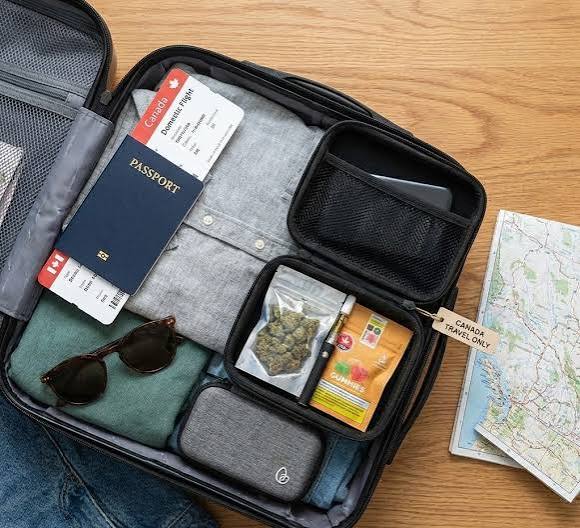
Can you travel with weed? The short answer is yes, but your safety, legality, and overall experience depend on the form of cannabis you carry, your mode of transit, and the laws of your destination. Under the 2018 Farm Bill, federally compliant hemp products—including THCa flower, Delta-9 hemp edibles, and CBD—contain less than 0.3% Delta-9 THC by dry weight and can legally move across state lines. However, traditional marijuana remains a federally controlled substance, meaning air travel, federal land transit, and international borders carry distinct legal risks.
Navigating the web of airport security guidelines, state border regulations, and discreet packing techniques requires accurate information. Whether you plan to take a short domestic flight, embark on a cross-country road trip, or navigate state-level legalization, this comprehensive guide provides actionable, step-by-step strategies to transport your stash legally, discreetly, and safely.
Table of Contents
The Legal Landscape: Federal vs. State Cannabis Rules
Understanding how to travel with weed requires recognizing the sharp divide between federal jurisdiction and state-level reform. The rules governing your journey depend entirely on who enforces the law where you are traveling.
                         ┌─── Federal Law (Farm Bill) ─── Legalizes Hemp (<0.3% Delta-9 THC)
                         │                                Governs Airports, Airspace & Interstate Commerce
Jurisdictional Divide ───┼
                         │
                         └─── State Law ────────────────── Regulates Local Possession, Sales & Driving
                                                          Varies from Full Legalization to Strict Bans
Federal Jurisdiction: The 2018 Farm Bill vs. Controlled Substances Act
At the federal level, cannabis is divided into two legal categories:
Hemp: Any cannabis plant or derivative containing no more than 0.3% Delta-9 THC on a dry-weight basis. The 2018 Agricultural Improvement Act removed hemp from the Controlled Substances Act (CSA), legalizing its transportation across state lines.
Marijuana: Any cannabis plant containing more than 0.3% Delta-9 THC. Marijuana remains classified as a Schedule I controlled substance under federal law.
Because airports, federal airspace, national parks, and interstate highways fall under federal oversight, carrying traditional marijuana across these boundaries remains technically illegal under federal statute—even when traveling between two states that have legalized adult-use cannabis.
State-Level Patchwork: Adult-Use, Medical, and Prohibition States
While federal law applies to interstate transit, local ground authorities enforce state statutes once you arrive at your destination.
| State Legal Category | Possession Rules | Interstate Transport | Primary Risk Factor |
| Recreational / Adult-Use States | Legal within state limits (typically 1–2 oz flower) | Illegal across state lines under federal law | Open container violations in vehicles |
| Medical Marijuana States | Legal only for state-registered cardholders | Reciprocal recognition varies by state | Unlicensed possession charges |
| Strict Prohibition States | Illegal for all uses | Strictly prohibited | Misdemeanor or felony arrest |
For example, registered patients navigating state regulations can consult regional resources like My Florida Green’s Medical Marijuana Travel Guide or review regional law updates on the Orlando Weekly Cannabis News Archive to see how state-level medical reciprocity and vehicle storage policies operate on the ground.
How to Fly with Weed: Understanding TSA Policies
Learning how to fly with weed safely begins with understanding the primary mission of airport security screeners.
[TSA Checkpoint] ──> Primary Focus: Aviation Threats (Weapons/Explosives)
                         │
                         ├──> No Contraband Detected ──> Proceed to Gate
                         │
                         └──> Cannabis Detected ─────> Refer to Local Airport Police
                                                               │
                                         ┌─────────────────────┴─────────────────────┐
                                         ▼                                           ▼
                              [Legal State Airport]                      [Prohibition State Airport]
                              Allowed to board, discard,                 Possession citation, product
                              or return product to vehicle               seizure, or potential arrest
What Is the Official TSA Weed Policy?
The Transportation Security Administration (TSA) operates as an agency of the Department of Homeland Security. Their official mandate focuses exclusively on passenger safety and aviation security—not drug interdiction.
Official TSA Guidelines: “TSA security officers do not search for illegal drugs, but if any illegal substance is discovered during security screening, TSA will refer the matter to a law enforcement officer.”
TSA screeners do not use narcotics detection dogs or chemical testing strips at standard passenger checkpoints. The canine units visible in airport terminals are trained specifically to detect explosives, firearms, and volatile chemical agents.
What Happens if TSA Finds Cannabis in Your Bag?
If a TSA agent spots plant material, edibles, or vape pens during X-ray inspection or a routine bag check, standard protocol requires them to call local airport police. The responding officer handles the situation based on local jurisdiction:
Airports in Legal States (e.g., LAX, DEN, SEA): If your stash complies with state personal possession limits, airport police routinely allow you to keep the material, return it to your vehicle, or voluntarily surrender it in a disposal box.
Airports in Prohibition States: Local police enforce state laws, which can result in confiscation, civil fines, or criminal citations.
Carry-On vs. Checked Bags: Where Should You Pack?
Proper bag placement prevents unnecessary security delays and protects your devices:
Carry-On Luggage (Best Option for Vapes and Hemp): Lithium-ion batteries used in electronic vape pens and dry herb vaporizers are banned from checked baggage by the Federal Aviation Administration (FAA) due to fire hazards. Always keep vape batteries in your carry-on luggage.
Checked Bags: Checked luggage undergoes automated X-ray scans and physical screening in cargo bays. Unsealed, fragrant plant material in checked bags can trigger manual inspections, leading to confiscated items or notice-of-inspection slips inside your luggage.
Road Trips & Driving: State Lines, Open Containers, and Traffic Laws
Driving is one of the most common ways people travel with cannabis, but highway transit carries higher chances of police interaction than air travel.
                  ┌─── Trunk or Locked Cargo Area (Out of Driver Reach)
                  │
Safe Vehicle ─────┼─── Factory-Sealed Packaging with Original Lab Labels
Storage Rules     │
                  └─── ZERO Consumption inside the Vehicle (Parked or Moving)
Open Container Laws in Motor Vehicles
Even within fully legal recreational states, state vehicle codes strictly forbid driving with open containers of cannabis.
What Constitutes an Open Container? Any jar, pouch, or package with a broken factory seal, an open zip-top, or clear evidence of prior use.
Proper In-Car Storage: Store all cannabis products in the trunk, rear cargo area, or a locked glove compartment—completely out of reach of both the driver and passengers.
Crossing State Borders in a Car
Driving across state lines with traditional marijuana violates federal trafficking statutes, even when traveling between neighboring legal states (such as driving from Oregon into Washington).
For compliant hemp and THCa flower, federal law protects interstate commerce. However, local officers in strict states may not visually distinguish compliant hemp from high-Delta-9 cannabis without laboratory testing. Keep all original purchase receipts, packaging, and laboratory certificates readily accessible.
How to Pack Weed for Travel: Step-by-Step Security Protocol
Whether traveling by plane, train, or automobile, packing your items neatly and odor-free reduces stress and keeps your belongings secure.
1.Keep Products in Factory-Sealed Packaging:Preserves batch numbers and legal compliance information.
Do not transfer raw flower or edibles into generic plastic bags or unlabeled tins. Leave items in their original child-resistant, sealed packaging displaying state compliance badges or hemp declarations.
2.Include the Certificate of Analysis (COA):Provides physical proof of legal hemp compliance.
If carrying THCa flower or hemp-derived CBD, print out the product’s official third-party lab report (COA). Keep this sheet folded alongside your product to verify that the Delta-9 THC content remains below the legal 0.3% limit.
3.Use Multi-Layer Odor-Blocking Containers:Eliminates fragrant terpene scents that attract attention.
Store your factory-sealed products inside a carbon-lined smell-proof travel bag, a hard-shell airtight case, or vacuum-sealed storage pouches. Preventing odors stops your bag from smelling fragrant during routine handling.
4.Pack Organizationally Alongside Regular Toiletries:Maintains a clean X-ray image during airport screening.
Place your odor-proof case neatly within your carry-on bag alongside standard toiletries or electronic cables. Avoid wrapping containers in dense aluminum foil or heavy metal tape, which obscures X-ray screens and prompts physical inspections.
Different Forms of Cannabis: Flower, Concentrates, Edibles, and Vapes
Different cannabis formats carry distinct advantages, storage requirements, and security profiles when traveling.
                      ┌─── Flower & THCa ────── Requires Strict Odor Isolation & Original COAs
                      │
Product Formats ──────┼─── Vape Carts & Pens ── MUST Be Carried in Carry-On (FAA Lithium Battery Rules)
                      │
                      └─── Edibles & Tinctures ─ Most Discreet Option; Liquid Rules Apply (3-1-1 Rule)
1. Flower and High-Grade Kind Bud
Raw cannabis flower presents the highest odor risk due to volatile aromatic terpenes like myrcene and pinene.
Best Strategy: Use double-sealed carbon containers.
Legal Alternative: Premium options available through Smoke kind—such as compliant THCa hemp—offer identical aroma and full-spectrum effects when heated, while providing stronger legal framework support under federal interstate commerce rules.
2. Vape Cartridges and Disposable Pens
Vapes are popular for travel because they produce minimal odor and resemble standard e-cigarettes.
Packing Rule: Disconnect cartridges from batteries where possible. Store liquid cartridges in your carry-on bag in a clear pouch alongside standard liquid items.
FAA Compliance: All lithium-ion batteries must stay in carry-on bags to comply with fire safety rules. Never place vape batteries in checked luggage.
3. Edibles, Gummies, and Capsules
Edibles represent the most discreet way to travel with cannabis.
Packing Rule: Gummies, chocolates, and mints resemble standard confectionery items. Keep them in cool, temperature-controlled bag compartments to prevent melting into a single solid block during transit.
4. Tinctures and Topicals
Sublingual oils and topicals are subject to liquid restrictions during air travel.
TSA Liquid Rule: Liquids, gels, and aerosols in carry-on baggage must follow the 3-1-1 rule—containers must be 3.4 ounces (100ml) or smaller and fit inside a single quart-sized clear zip-top bag.
International Travel Warning: Zero Tolerance Policies Abroad
CRITICAL LEGAL WARNING: Never attempt to cross international borders with any cannabis product—including THCa flower, Delta-9 edibles, medical marijuana, or CBD oils.
[Domestic Airport Terminal] ──> International Border Crossing ──> [Foreign Destination Customs]
                                                                          │
                                                               (Zero-Tolerance Laws)
                                                                          v
                                                               [Immediate Arrest & Prison]
Crossing international borders places you under foreign legal jurisdiction and international drug enforcement treaties. Foreign customs agencies do not recognize U.S. state medical cards, state legalization laws, or the 2018 Farm Bill.
Consequences of International Transport
Zero-Tolerance Nations: Countries like Singapore, Japan, the United Arab Emirates, and South Korea enforce strict zero-tolerance policies. Carrying trace amounts or vape residues can lead to immediate arrest, long prison sentences, heavy fines, or permanent deportation.
Border Confiscation: Customs and Border Protection (CBP) officers utilize drug-sniffing dogs, high-resolution scanners, and personal searches at all international entry and exit points. Leave all products at home when traveling internationally.
Common Travel Mistakes to Avoid
Even experienced travelers make simple mistakes that lead to unnecessary delays or lost products.
1. Packing Vape Batteries in Checked Luggage
Placing vape batteries in checked luggage violates FAA fire safety rules. When cargo X-ray screeners spot battery packs in checked bags, agents open the luggage to remove the battery, which leads to manual searches of your entire bag.
2. Consuming Cannabis in Public Transit Areas
Consuming cannabis inside airport terminals, parking garages, rental car hubs, or passenger cabins is illegal nationwide. Public consumption in unauthorized spaces attracts law enforcement intervention regardless of local possession laws.
3. Using Unlabeled, Generic Containers
Storing flower, gummies, or joints in plain plastic sandwich bags or unmarked pill bottles makes your items look suspicious during routine security checks. Always keep items in labeled, factory-sealed containers.
4. Forgetting Local Destination Laws
Assuming that laws in your home state apply everywhere you travel is a common mistake. Always verify the local cannabis possession, purchasing, and consumption laws of your destination city and state before leaving home.
Frequently Asked Questions (FAQs)
Can you bring weed on a domestic flight in a legal state?
If flying between two airports located in legal states, TSA officers who encounter personal quantities typically refer the matter to local airport police. In legal jurisdictions like Los Angeles (LAX) or Seattle (SEA), local police generally confirm you are within state limits and allow you to proceed. However, federal regulations technically prohibit traditional marijuana on all commercial flights.
Is THCa flower legal to fly with domestically?
Under federal law, hemp-derived THCa flower containing no more than 0.3% Delta-9 THC on a dry-weight basis meets the definition of legal hemp under the 2018 Farm Bill. To ensure smooth transit, keep the product sealed in its original packaging with a printed third-party laboratory Certificate of Analysis (COA).
What happens if TSA finds a vape pen in my carry-on?
TSA requires all lithium-ion vape batteries to be packed in carry-on bags. If an agent inspects your vape pen, they verify that the device complies with liquid and battery limits. If they suspect the oil contains illicit substances, they may refer the item to local airport police, who respond based on local state laws.
Can I travel across state lines with a medical marijuana card?
A medical marijuana card provides legal protection only within the issuing state (or in states with formal medical reciprocity agreements). It does not authorize you to carry traditional marijuana across state lines or through federal security checkpoints.
How do I eliminate cannabis odor while driving?
Store all flower and concentrates in carbon-lined smell-proof bags or airtight glass containers placed inside your vehicle’s trunk. Never consume cannabis inside your vehicle, as standing odor provides officers with probable cause to search the car.
Final Thoughts: Safe and Responsible Travel
Learning how to travel with weed safely requires understanding local regulations, selecting travel-friendly products, and using discreet packing habits. By choosing federally compliant hemp options, keeping items in their original sealed packaging, following FAA battery guidelines, and storing products in carbon-lined smell-proof containers, you can travel with complete peace of mind.